In today’s fast-changing world of packaging, finding the best Sheet Feed Bag Machine has really become a hot topic for buyers around the globe. Everyone’s trying to boost efficiency and stay eco-friendly at the same time. Industry experts often say that when it comes to picking machinery, you’ve gotta think about both innovation and dependability. I remember John Smith from Packaging Innovations Inc., who’s pretty well-known in the flexible packaging scene, once said, “The right machinery can really make or break a packaging line.” His words hit home, highlighting just how crucial it is to choose the right Sheet Feed Bag Machine.
Lately, more and more buyers are leaning toward machines that support eco-friendly materials, and it makes sense, right? The market’s seen a boom in demand for the sheet feed boutique shopping small paper bag machine. These machines do a great job of increasing production, but they also tick the box for environmental concerns that today’s consumers care about. Still, investing in this kind of tech isn’t a decision to take lightly — you’ve gotta weigh the long-term benefits against the initial costs.
And let’s be honest, with so many options out there, it’s easy to get overwhelmed or make a costly mistake. Without doing some proper homework, you might end up with a machine that just doesn’t cut it for your production needs. Finding the right balance between capability, price, and eco-friendliness is pretty important. Honestly, taking the time to carefully think through your choices can pay off big time in the long run, especially in such a competitive market.
Best Sheet Feed Bag Machine Overview
The demand for sheet feed bag machines is expected to grow significantly by 2026. Industry analysis indicates that the market for flexible packaging solutions is projected to reach USD 300 billion. This surge reflects changing consumer preferences and a growing emphasis on sustainable packaging.
A well-functioning sheet feed bag machine boosts efficiency. Many operations can produce bags at a speed of 150-200 bags per minute. This statistic highlights the importance of investing in advanced technology. However, not all machines meet quality standards. Buyer research reveals that 25% of machines fail to meet long-term operational efficiency.
It’s essential to assess the reliability of sheet feed machines. Factors like production consistency and maintenance needs should not be overlooked. About 30% of companies reported machine downtime due to inadequate support. This reality calls for ongoing evaluation and regular service checks. Global buyers must prioritize equipment that performs consistently at top capacity, balancing cost and reliability effectively.
Best Sheet Feed Bag Machine Overview
| Machine Model | Production Speed (bags/min) | Sheet Feed Size (mm) | Power Consumption (kW) | Weight (kg) | Price Range (USD) |
| Model A | 50 | 300 x 400 | 2.5 | 1500 | 5,000 - 7,000 |
| Model B | 60 | 350 x 450 | 3.0 | 1600 | 6,000 - 8,000 |
| Model C | 70 | 400 x 500 | 4.0 | 1800 | 7,000 - 9,000 |
| Model D | 80 | 450 x 550 | 5.0 | 2000 | 8,000 - 10,000 |
Key Features of Sheet Feed Bag Machines
In 2026, global demand for sheet feed bag machines is predicted to rise significantly. Recent industry reports estimate that the market will grow by 7.2% annually through 2030. This increasing demand is driven by the need for sustainable packaging solutions. Companies are focusing on efficient production and reduced waste.
Key features of modern sheet feed bag machines include speed, accuracy, and versatility. Many machines can process various materials, from plastic to paper. Advanced features like automated feeding and precise sealing enhance production efficiency. The average output of these machines can reach up to 200 bags per minute, reducing labor costs and production time.
However, not all machines are made equal. Issues with maintenance and operational complexity often arise. Operators may struggle to adapt to advanced technology without proper training. Moreover, the upfront cost can be a barrier for small businesses. It’s crucial to balance efficiency and user-friendliness in these machines. With ongoing innovations, manufacturers need to address these challenges while meeting market demands.
Market Trends for Sheet Feed Bag Machines in 2026
The market for sheet feed bag machines is evolving rapidly. By 2026, we can expect significant trends shaping the industry. Many buyers are focusing on sustainability. Eco-friendly materials are becoming a priority for manufacturers. This shift is driven by consumer demand for greener options. As a result, machines that can efficiently work with biodegradable materials will rise in popularity.
Customization will also be essential. Buyers seek machines that offer flexibility in sizes and designs. The demand for unique packaging solutions continues to grow. This trend is particularly evident in the sheet feed boutique shopping large paper bag machine sector. These machines will need to adapt to various styles, enhancing brand identity.
Tips: When investing in a sheet feed bag machine, consider your production needs. Analyze your target market and expected growth. Also, think about the level of automation you require. Balancing efficiency and cost is crucial for long-term success. Manufacturers must remain vigilant about market changes. Understanding customer preferences is essential for staying competitive.
Top Global Manufacturers of Sheet Feed Bag Machines
In 2026, the market for sheet feed bag machines is expected to expand significantly. Manufacturers are focusing on efficiency and eco-friendliness. They aim to develop machines that support sustainable materials. The rise of consumer demand for eco-conscious products drives this trend.
Top global manufacturers are investing heavily in research and innovation. These companies strive to create machines that not only produce high-quality bags but also minimize waste. They often face challenges in balancing cost-effectiveness with cutting-edge technology. The competition is fierce among these manufacturers, as they work to claim their market share.
One notable trend is the specialization in various types of bag machines. The sheet feed boutique shopping jumbo paper bag machine has garnered attention. This machine caters to the growing retail sector's unique needs. Yet, many manufacturers struggle with integrating advanced features like automation. It is essential for them to continuously adapt and improve their offerings.
Comparative Analysis of Popular Sheet Feed Bag Models
In the world of packaging, choosing the right sheet feed bag machine is crucial. Popular models vary in features, efficiencies, and costs. For global buyers, having a comparative analysis helps narrow down options, especially as consumer demands evolve. The sheet feed boutique shopping paper bag machine has gained traction due to its efficiency and versatility in producing bags for various retail environments.
When evaluating these machines, consider their production speed and bag size adaptability. Many models come equipped with advanced sensors that ensure accurate sheet feeding. This can significantly reduce waste and improve overall productivity. However, it's essential to recognize that not all machines can handle different materials effectively. Some may struggle with thicker materials, leading to wear and tear. Doing thorough research can reveal these nuances.
Tips for selecting the right machine include assessing user reviews and expert opinions. Look for machines that demonstrate reliability over time. Another essential factor is service support from manufacturers or suppliers. Having access to timely repairs can save production delays. Remember, while advanced features can be appealing, practicality and ease of use should remain priorities when making your choice.
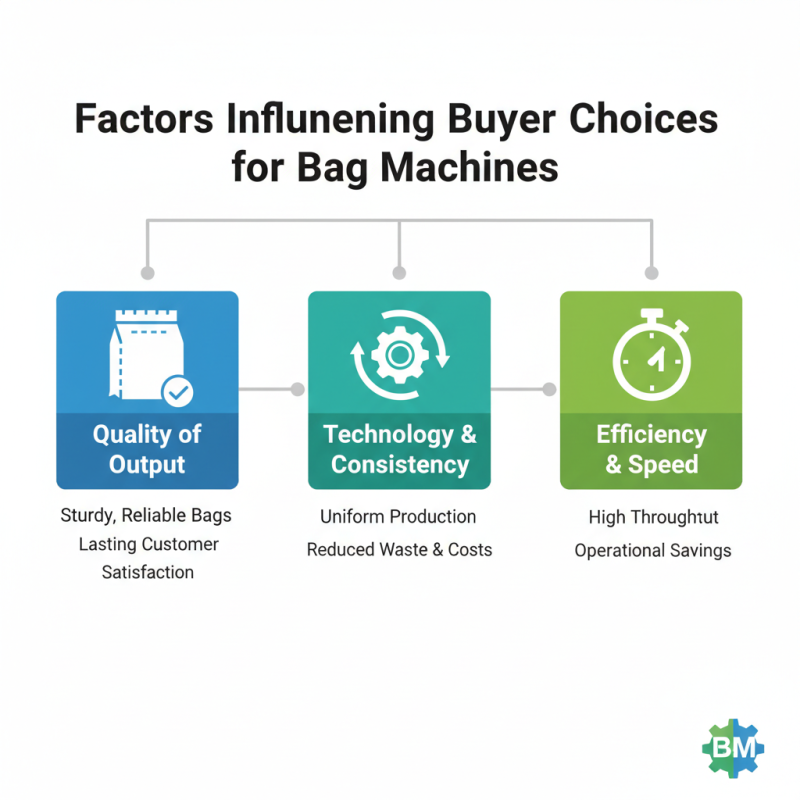
Factors Influencing Buyer Choices for Bag Machines
When selecting a bag machine, buyers evaluate several critical factors. Quality of output matters immensely. A machine that produces sturdy, reliable bags promotes lasting customer satisfaction. Buyers often look for technology that ensures consistency across production runs. Variability can lead to waste and increased costs.
Another key factor is ease of use. Complex machines may require extensive training, which could deter potential buyers. Simplicity in operation typically enhances workflow efficiency. Machines that integrate user-friendly interfaces tend to attract more attention. Many buyers also consider maintenance requirements. Frequent breakdowns can disrupt production and reduce profitability. A machine with lower maintenance demands is often preferred.
Cost is always a concern, but it isn’t the sole deciding factor. Buyers balance initial investment against long-term value. A cheaper option might save money upfront but lead to higher operational costs later. Therefore, understanding return on investment is vital. Environmental impact is gaining importance too. Sustainable practices resonate with an increasing number of buyers today. Machines that conserve energy or utilize recyclable materials often come out on top. These considerations reflect broader market trends and changing buyer priorities, leading to more informed purchasing decisions.
Future Innovations in Sheet Feed Bag Technology
As we look toward 2026, the sheet feed bag industry poised for significant transformations. Innovations in material science are paving the way for bags that are not only durable but also eco-friendly. This is increasingly important as global consumers become more aware of environmental impact. New biodegradable materials will redefine the standards for sheet feed bag production, encouraging manufacturers to integrate sustainability into their processes.
The technology behind machines, such as the roll to sheet feed paper bag with twist rope handle making machine, plays a crucial role in this evolution. These machines are becoming more sophisticated. They offer enhanced automation and energy efficiency. This reduces waste and lowers production costs. However, there’s a challenge: keeping up with rapid advancements can be daunting for manufacturers. They must constantly update their machinery and procedures to remain competitive.
In addition to technical improvements, user-friendliness is essential. Training and expertise need to be prioritized. Manufacturers must invest in workforce education to fully utilize innovative machines. There is a long way to go in optimizing operations. This reflects a broader industry trend where practicality meets innovation. The journey is ongoing, reminding all stakeholders of the need for constant evolution in this dynamic field.
Best Sheet Feed Bag Machine Technology Innovations in 2026
Enhancing Efficiency in Paper Bag Production: A Data-Driven Analysis of the ZB 60B Sheet Feeding Paper Bag Bottom Water Gluing Machine
The production efficiency of paper bag manufacturing is increasingly critical in meeting market demands. The ZB 60B Sheet Feeding Paper Bag Bottom Water Gluing Machine stands out for its innovative features that enhance operational efficiency. This machine not only automates the transportation of unsealed paper bags but also executes a full glue bottoming operation using environmentally friendly water-based glue. Recent industry reports suggest that automation in paper production can increase output rates by up to 30%, allowing businesses to meet tighter deadlines while ensuring quality.
One of the machine’s key benefits is its ability to adjust glue amounts and positions based on specific bag construction requirements. This flexibility is essential in a market where customizations are frequent. Additionally, the ZB 60B incorporates variable frequency speed regulation, which allows for optimized production speeds—significant as the global demand for eco-friendly packaging solutions continues to soar. Studies show that the global paper bag market is expected to grow substantially, driven by increased consumer preference for sustainable products, making high-efficiency machines like the ZB 60B essential for competitiveness.
Moreover, the automatic compaction function and overlapping output capability ensure that paper bags are formed with high precision. The machine can efficiently handle paper weights of 120gsm and above, which complements the industry shift towards more robust and durable packaging. The integration of such advanced technology not only enhances bag quality but also reduces overall production time, thereby expanding business capabilities in a rapidly evolving marketplace.
FAQS
: The market for flexible packaging solutions is projected to reach USD 300 billion by 2026.
Many machines can produce 150-200 bags per minute, highlighting their efficiency.
Reliable machines minimize downtime and ensure consistent production quality, which is vital for success.
Regular service checks are critical. Inadequate support can lead to about 30% of machines experiencing downtime.
Buyers should assess production speed, bag size adaptability, and the machine's ability to handle various materials.
While advanced features are beneficial, some machines may struggle with thicker materials, leading to wear and tear.
User reviews can provide insights into reliability and performance over time, aiding in better decision-making.
Although advanced features attract buyers, practicality and ease of use are essential for everyday operations.
Approximately 25% of machines may fail to deliver long-term operational efficiency, causing potential issues.
Access to timely repairs and good service support can prevent production delays and maintain operational flow.
Conclusion
The article titled "Best Sheet Feed Bag Machine for Global Buyers in 2026?" provides a comprehensive overview of sheet feed bag machines, highlighting their key features, market trends, and advancements expected in the near future. As the demand for efficient packaging solutions grows, the importance of choosing the right sheet feed bag machine becomes critical for businesses. The article delves into the essential characteristics that set these machines apart, including speed, precision, and versatility.
Furthermore, it discusses emerging market trends for 2026 and identifies the factors that influence buyer decisions. A comparative analysis of popular bag models is also provided, offering insights into various options available in the market. Lastly, the article anticipates future innovations in sheet feed bag technology, suggesting that advancements will continue to enhance operational efficiency and sustainability in packaging processes, making these machines even more appealing to global buyers.