Picking the right Flat Bag Making Machine is a pretty important decision for businesses in the packaging world. It can really make or break your efficiency, product quality, and, of course, your profits. These days, everyone’s looking for eco-friendly and versatile packing options, so it’s super important to find a machine that fits your specific needs. With so many choices out there, taking the time to understand the features and capabilities of different machines can really help keep your operations smooth and boost your product offerings.
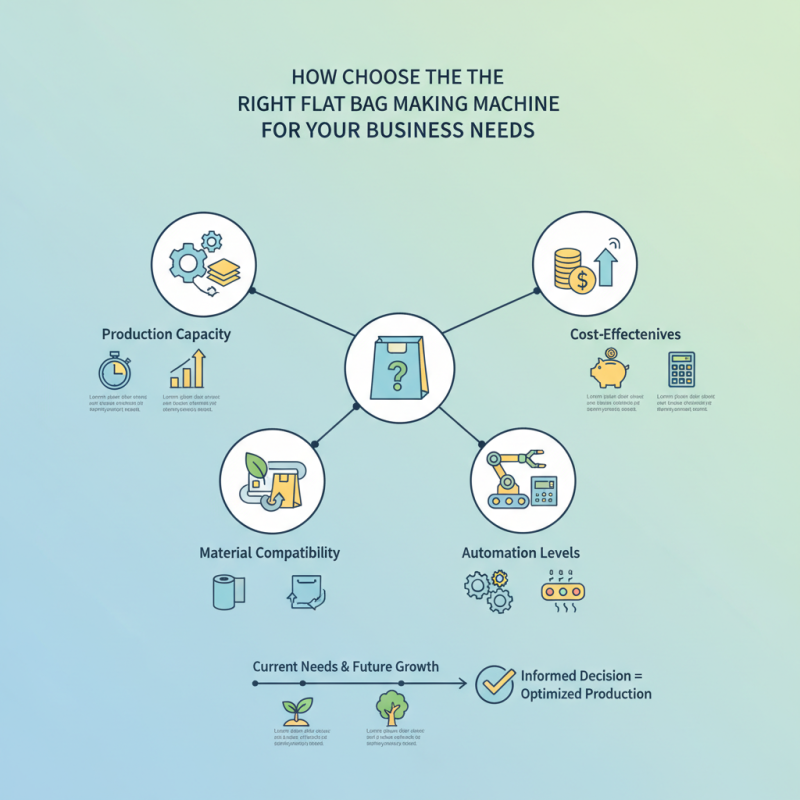
In this guide, I’ll walk you through some key things to think about when choosing a Flat Bag Making Machine. Things like how much it can produce, what materials it works with, how automated it is, and how much it costs. It’s also worth considering both where your business is now and where you want it to go – making sure your investment lines up with your long-term goals. When you make an informed choice, it’s easier to optimize your production and deliver high-quality packaging solutions that really meet what your customers are after.
Understanding the Different Types of Flat Bag Making Machines
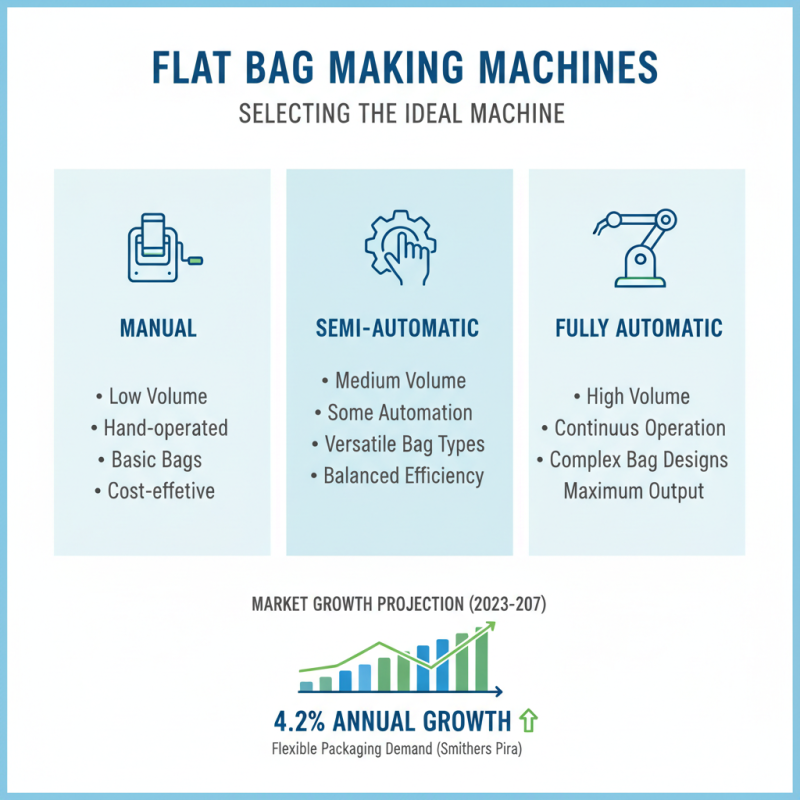
When selecting the ideal flat bag making machine for your business, it’s essential to understand the variety of types available in the market. Generally, flat bag making machines can be categorized into three main types: manual, semi-automatic, and fully automatic machines. Each type serves different production needs and operational efficiencies. According to recent market research conducted by Smithers Pira, the demand for flexible packaging, which includes flat bags, is projected to grow at a robust rate of approximately 4.2% annually through 2027, illustrating the increasing significance of these machines in manufacturing.
Manual flat bag making machines are often the most cost-effective option, ideal for smaller operations or businesses just starting in the industry. They require less investment but also demand more labor, which can affect output speed. On the other hand, semi-automatic machines offer a balance between cost and efficiency, often incorporating some automated features to enhance productivity while still allowing for operator input. Fully automatic flat bag making machines, though more expensive, significantly increase production speed and consistency, making them suitable for large-scale operations. A report by Market Research Future indicates that fully automated machines are expected to capture a significant share of the market due to their operational efficiencies and the push for higher output in the competitive packaging sector.
In addition to the type of machine, businesses should also consider the material compatibility and customization options. Flat bag making machines are designed to work with various materials like polyethylene, polypropylene, and biodegradable films, catering to different packaging needs. Choosing a machine that aligns with your specific material requirements and production scale can significantly impact your operational efficiency and responsiveness to market trends, especially as consumer preferences shift towards sustainable packaging solutions.
Key Factors to Consider When Choosing a Flat Bag Machine
When selecting a flat bag making machine for your business, there are several key factors to consider that can significantly impact your operational efficiency and product quality. First, assess your production volume requirements. A machine capable of handling your daily output needs will not only streamline your workflows but also ensure that you meet customer demands without unnecessary delays. Consider the machine's speed, as faster production rates can enhance your profitability, reducing labor costs and optimizing your overall process.
Another crucial aspect is the versatility of the machine. Depending on the types of bags you plan to produce, it's advantageous to choose a machine that accommodates various materials and sizes. This flexibility allows your business to adapt to changing market demands and explore new product opportunities. Additionally, evaluate the machine's ease of use and maintenance. A user-friendly interface and minimal downtime for maintenance are essential for a smooth operation and long-term sustainability, enabling your operators to focus on production rather than troubleshooting issues.
How to Choose the Right Flat Bag Making Machine for Your Business Needs
| Key Factor | Description | Importance Level |
| Production Capacity | Determine the number of bags produced per hour to meet your business demands. | High |
| Machine Dimensions | Ensure the machine fits within your production facility's space constraints. | Medium |
| Material Compatibility | Check what materials can be used with the machine for your product requirements. | High |
| Ease of Use | Evaluate how user-friendly the controls and operation are. | Medium |
| Cost of Operation | Consider both initial investment and ongoing operational costs. | High |
Evaluating Production Capacity: Matching Machine Output to Demand
When selecting a flat bag making machine, evaluating production capacity is crucial to ensure that your equipment can meet market demand. According to a report by Smithers Pira, the global flexible packaging market is expected to reach $300 billion by 2024, with flat bags being a significant segment. As consumer preferences evolve towards sustainable and customizable packaging solutions, businesses must align their production capabilities with these trends. Choosing a machine with adjustable output rates can allow manufacturers to respond promptly to fluctuations in demand, avoiding the pitfalls of overproduction or supply shortages.
In assessing machine output, it's essential to consider both the speed of production and the complexity of designs. Industry standards indicate that high-output machines can produce anywhere from 100 to 300 bags per minute, depending on the bag size and material. For instance, a company targeting a 10,000 bags-per-week requirement should ensure that their selected machine can comfortably produce this quantity while accommodating potential increases in demand due to seasonal spikes or promotional activities. By thoroughly analyzing production needs against the output specifications of various machines, businesses can make informed decisions that support both their current operations and future growth aspirations.
Material Compatibility: Selecting the Right Machine for Your Bags
When selecting a flat bag making machine, one of the most critical factors to consider is material compatibility. The type of materials you plan to use for your bags—such as polyethylene, polypropylene, or biodegradable films—can significantly influence the machine's performance and output quality. Each material has distinct characteristics, including thickness, flexibility, and sealability, which impacts the machine settings and capabilities required to produce high-quality bags.
For instance, if your business focuses on using thicker materials, you'll need a machine equipped with stronger sealing mechanisms and better cutting technologies to ensure the bags are durable and reliable. Conversely, if your operations involve thinner films, a machine that specializes in precision and speed will be necessary to minimize waste and enhance efficiency. Additionally, understanding the specific requirements of any biodegradable or specialty materials you intend to use is crucial, as they often require machines designed to handle unique properties without compromising production standards. Therefore, a thorough assessment of your material needs will guide you in choosing the right machine that not only meets your current requirements but also allows for future expansion and versatility in product offerings.
Assessing Automation Features for Increased Productivity
When selecting a flat bag making machine, one of the key considerations should be the level of automation it offers. Automated machines can significantly enhance productivity by minimizing human intervention, thereby reducing the chances of error and improving overall consistency in production. Features such as automatic feeding, cutting, and sealing capabilities can streamline the bag-making process, allowing businesses to meet higher demand without compromising on quality. Furthermore, automated systems often come with user-friendly interfaces that simplify operation and maintenance, making it easier for staff to adapt to new technologies.
Another vital aspect to consider is the flexibility of the automation features. Machines equipped with programmable settings allow users to easily switch between different bag sizes and styles, accommodating a diverse range of products. This adaptability not only increases efficiency but also positions the business to respond swiftly to changing market trends and customer preferences. Additionally, advanced automation systems often provide real-time monitoring, enabling businesses to track production pace and identify potential issues before they escalate, ensuring a smoother workflow and enhanced output. Overall, focusing on automation when choosing a flat bag making machine can lead to significant improvements in both productivity and operational effectiveness.
Cost Analysis: Budgeting for Your Bag Making Machine Investment
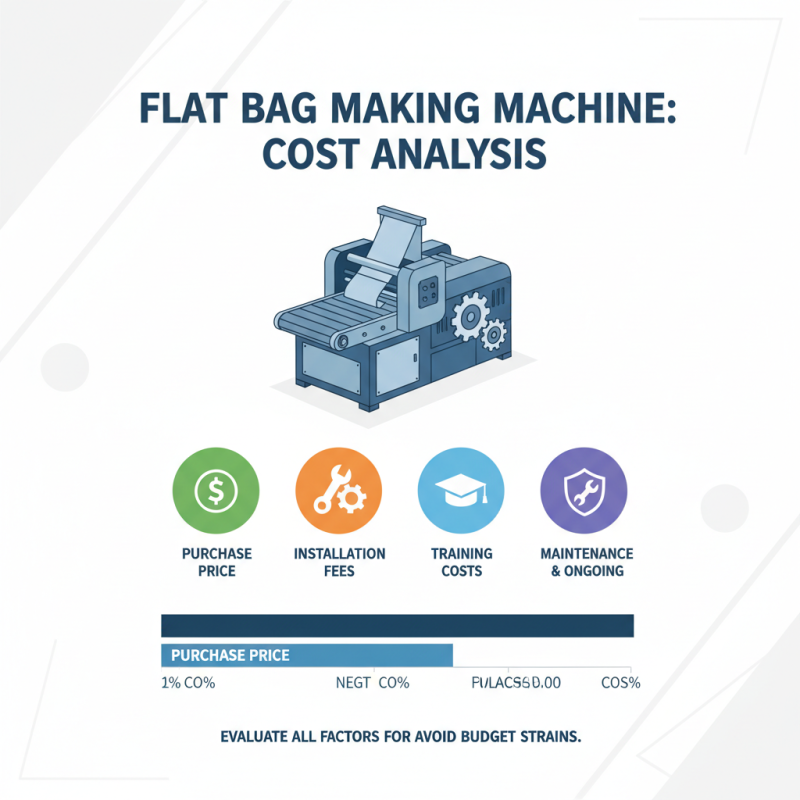
When considering the investment in a flat bag making machine, cost analysis becomes a pivotal aspect of your budgeting process. The initial purchase price of the machine is often the most significant expense; however, potential buyers must also account for installation fees, training costs, and ongoing maintenance. These factors can dramatically affect the overall budget and should be evaluated thoroughly to avoid unexpected financial strains.
Beyond the upfront costs, businesses should also factor in operational expenses such as energy consumption, material costs, and labor expenses. Understanding the machine's efficiency and throughput can help in estimating these ongoing costs, allowing for a more accurate projection of return on investment. It's essential to conduct a careful analysis of both direct and indirect costs to ensure that your choice aligns with your financial capabilities and production goals. By meticulously evaluating these aspects, you can make an informed decision that supports the growth and sustainability of your business.
After-Sales Support and Maintenance: Ensuring Long-Term Viability
When selecting a flat bag making machine for your business, after-sales support and maintenance are critical aspects that can significantly impact the long-term viability of your operations. A robust after-sales support system ensures that businesses can quickly address any issues that arise during production, thereby minimizing downtime. According to a report from the International Journal of Production Research, companies typically lose 20-30% of their productivity due to unforeseen machine inefficiencies. Thus, having access to reliable technical support can help mitigate these losses and sustain production flow.
Moreover, regular maintenance is essential for prolonging the lifespan of your equipment. The Machinery Maintenance Database indicates that proactive maintenance can extend machine life by up to 50%. This data underscores the importance of establishing a comprehensive maintenance plan, which includes regular servicing and inspections. By working with suppliers who offer clear maintenance schedules and readily available parts, businesses can not only enhance their machine performance but also ensure consistent quality in their bag production, meeting customer demands effectively.
Flat Bag Making Machine Features and Importance of After-Sales Support
Exploring the Market Potential of the ZB 700CT-240B: Insights from the Global Paper Manufacturing Industry Trends
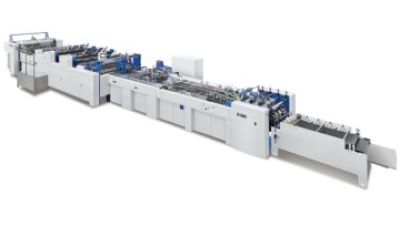
The ZB 700CT-240B single-sheet Paper Bag Making machine exemplifies an innovative solution tailored to meet the diverse needs of the global paper manufacturing industry. As the market trends shift towards eco-friendly and customizable packaging options, this machine stands out by offering the flexibility to produce a wide variety of paper bags. From food and shopping bags to specialized options like medical and gift bags, the versatility ensures that manufacturers can cater to specific market demands effectively.
One of the key advantages of the ZB 700CT-240B is its ability to customize bag specifications based on the performance requirements of the packaged products. This includes adjusting the size, thickness, and type of paper—be it archival paper, Ivory Board, or laminates—allowing companies to optimize production efficiency while minimizing resource wastage. By implementing this technology, manufacturers not only achieve economical production but also advance their commitment to environmental sustainability, positioning themselves favorably in today's competitive market landscape. With a focus on tailored solutions, the ZB 700CT-240B supports the growing trend of personalized and responsible packaging in the paper manufacturing sector.
FAQS
: Key factors include material compatibility, level of automation, and cost analysis, as these can significantly influence machine performance and output quality.
Different materials have unique characteristics such as thickness, flexibility, and sealability, which affect the machine settings and capabilities needed for high-quality bag production.
Thicker materials require machines with stronger sealing mechanisms and cutting technologies, whereas thinner materials benefit from machines designed for precision and speed.
Automated machines enhance productivity by reducing human intervention, minimizing errors, and improving consistency through features like automatic feeding and sealing.
Programmable automation allows for easy switching between different bag sizes and styles, increasing efficiency and enabling quick adaptation to market changes.
Cost analysis should include the initial purchase price, installation fees, training, ongoing maintenance, and operational costs such as energy and labor.
Analyzing operational expenses, including energy consumption and material costs, can provide a clearer estimate of total costs and potential return on investment.
A detailed budget evaluation helps avoid unexpected financial strains and ensures that the chosen machine aligns with business growth and production goals.
Conclusion
When selecting a Flat Bag Making Machine for your business, it is essential to understand the different types available and their specific functions. Key factors to consider include the production capacity, ensuring the machine's output aligns with your demand. Additionally, material compatibility plays a crucial role; you must select a machine that can effectively work with the materials used for the bags you intend to produce.
Automation features can significantly enhance productivity, making it important to evaluate these options as well. A thorough cost analysis will help you budget for your investment, ensuring it aligns with your financial resources. Lastly, consider after-sales support and maintenance services to guarantee the longevity and viability of your Flat Bag Making Machine over time. By addressing these components, you can make an informed decision that supports your business needs.